


• NO FEEDING PERMITTED IN THIS PORTION OF THE DRIVE THRU → LOOK ONLY!!
• REMAIN IN YOUR VEHICLE AT ALL TIMES
• DO NOT PULL ONTO STAFF SERVICE ROADS

Bactrian Camel
Scientific Name: Camelus bactrianus
IUCN Status: WILD population is critically endangered
Native Origin: Central asia
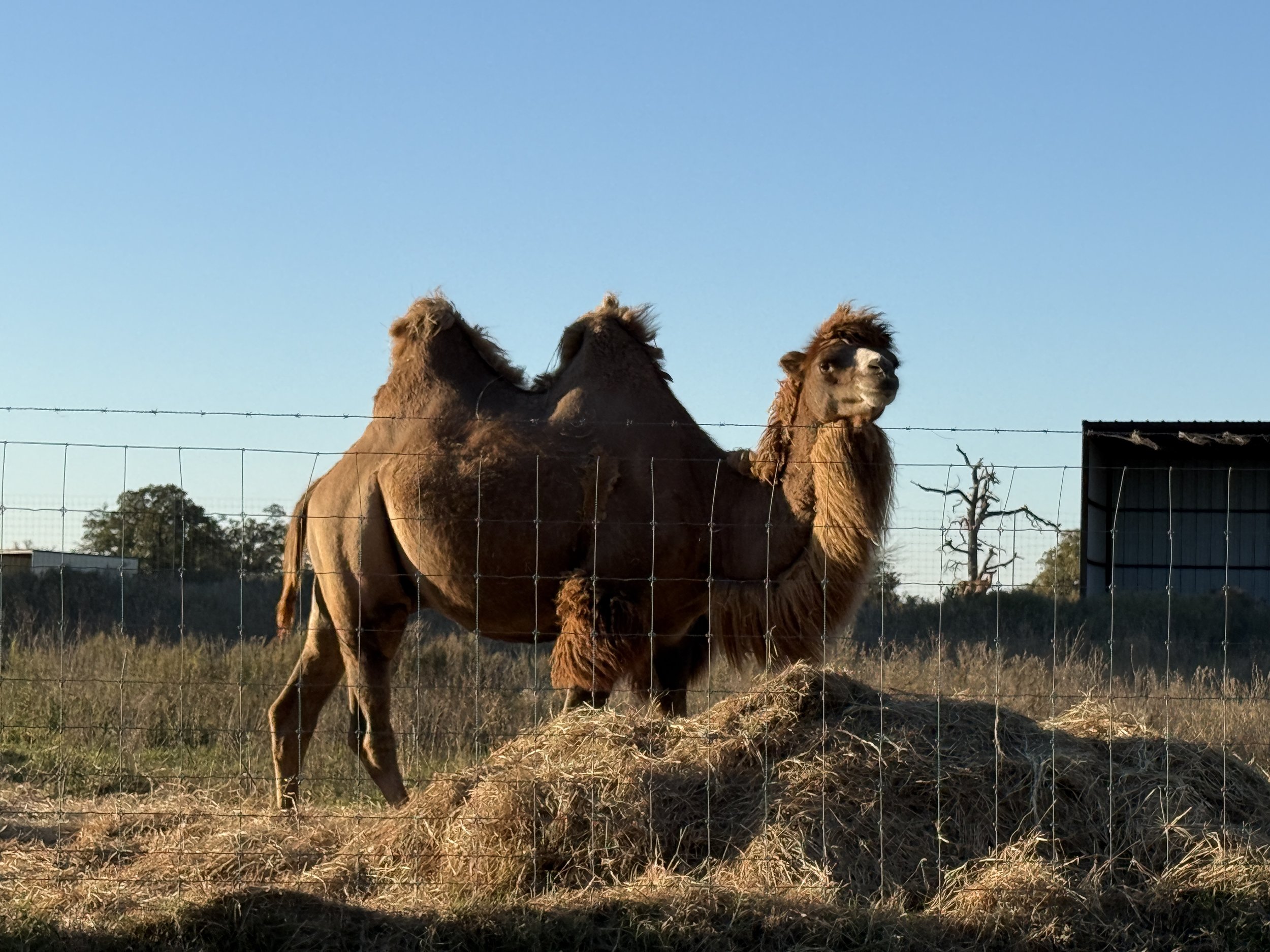
A camel’s humps do not store water; instead, they contain energy-rich fat that is metabolized when food is scarce.
Bactrian camels sweat at much higher body temperatures than most mammals. This adaptation allows them to conserve water.
Bactrian camels reach a top running speed of 25mph. Their “cousins”, the single humped Dromedary camel, can reach speeds up to 40mph.
Long eyelashes and sealable nostrils help protect against dust during frequent sandstorms in their natural habitat.
Gestation (time in utero before birth) lasts approximately 13-14 months.

POT-BELLIED PIG
Scientific Name: Sus domesticus
IUCN Status: Not evaluated
Native Origin: Domesticated Breed
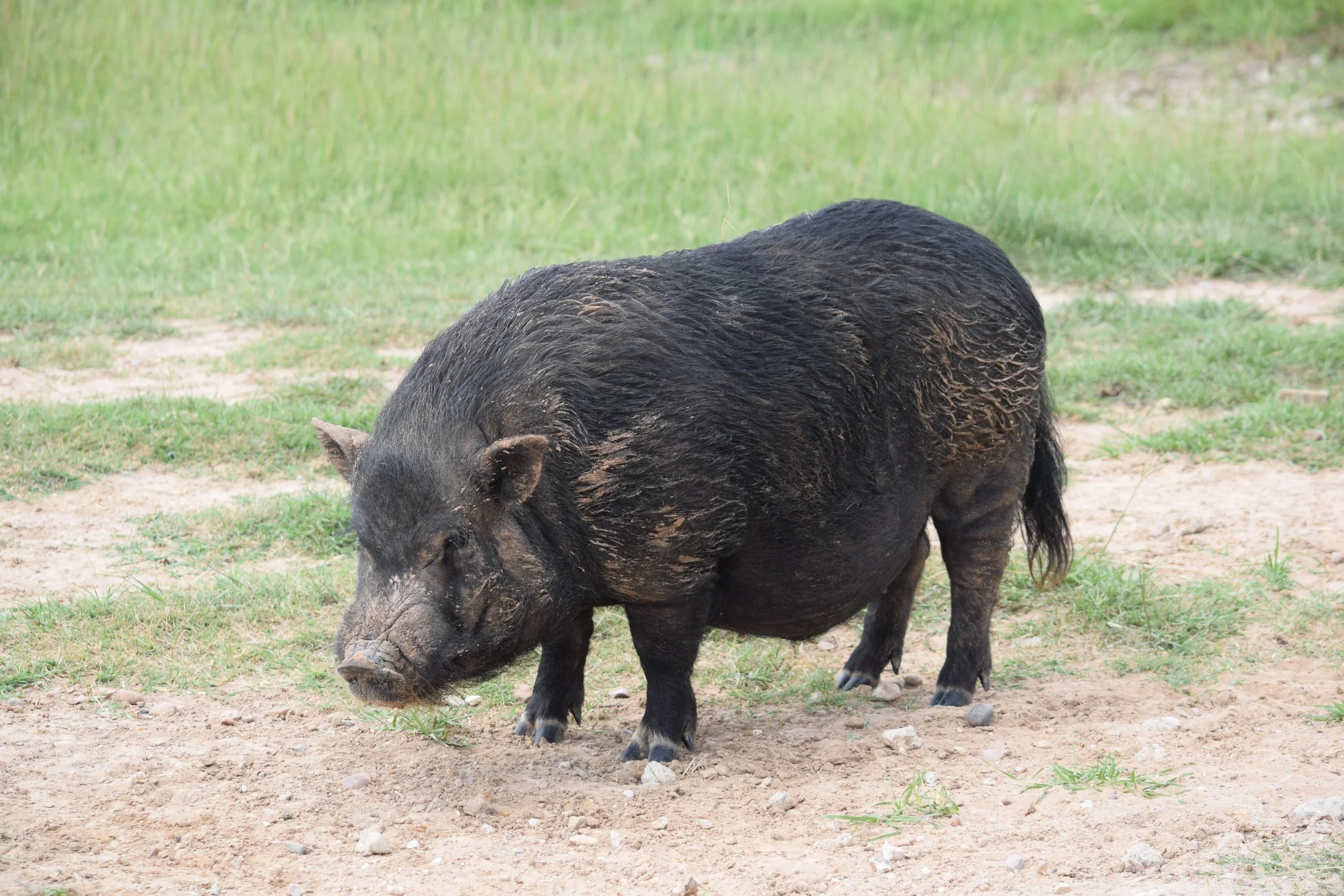
Pigs are highly intelligent animals and are often ranked among the most intelligent mammals, alongside animals such as chimpanzees, dolphins, and elephants.
Wallowing in mud helps pigs cool down, remove parasites, and protect their skin; mud also provides natural protection against ultraviolet (UV) rays.
Pigs were domesticated approximately 9,000–10,000 years ago, with domestication occurring independently in regions including eastern Anatolia and central China.
Pigs generally dislike being lifted off the ground and may resist when picked up, as they feel vulnerable when their feet are not supported.