


NO FEEDING PERMITTED IN THIS PORTION OF THE DRIVE THRU → LOOK ONLY!!
REMAIN IN YOUR VEHICLE AT ALL TIMES
DO NOT PULL ONTO STAFF SERVICE ROADS

Aoudad
Scientific Name: Ammotragus lervia
IUCN Status: Vulnerable
Native Origin: Africa
-Also known as barbary sheep
-Male Barbary sheep are ‘rams’ and females are ‘ewes’.
-famales are more aggressive than males
-they can jump over an obstacle of 2 meters (6.6ft).
-The horns of these sheep consist of keratin (as do our fingernails) and they continue to grow throughout their lifetime. Each winter a new growth ring appears.

Scientific Name: Bos javanicus
IUCN Status: Endangered
Native Origin: Asia
Banteng
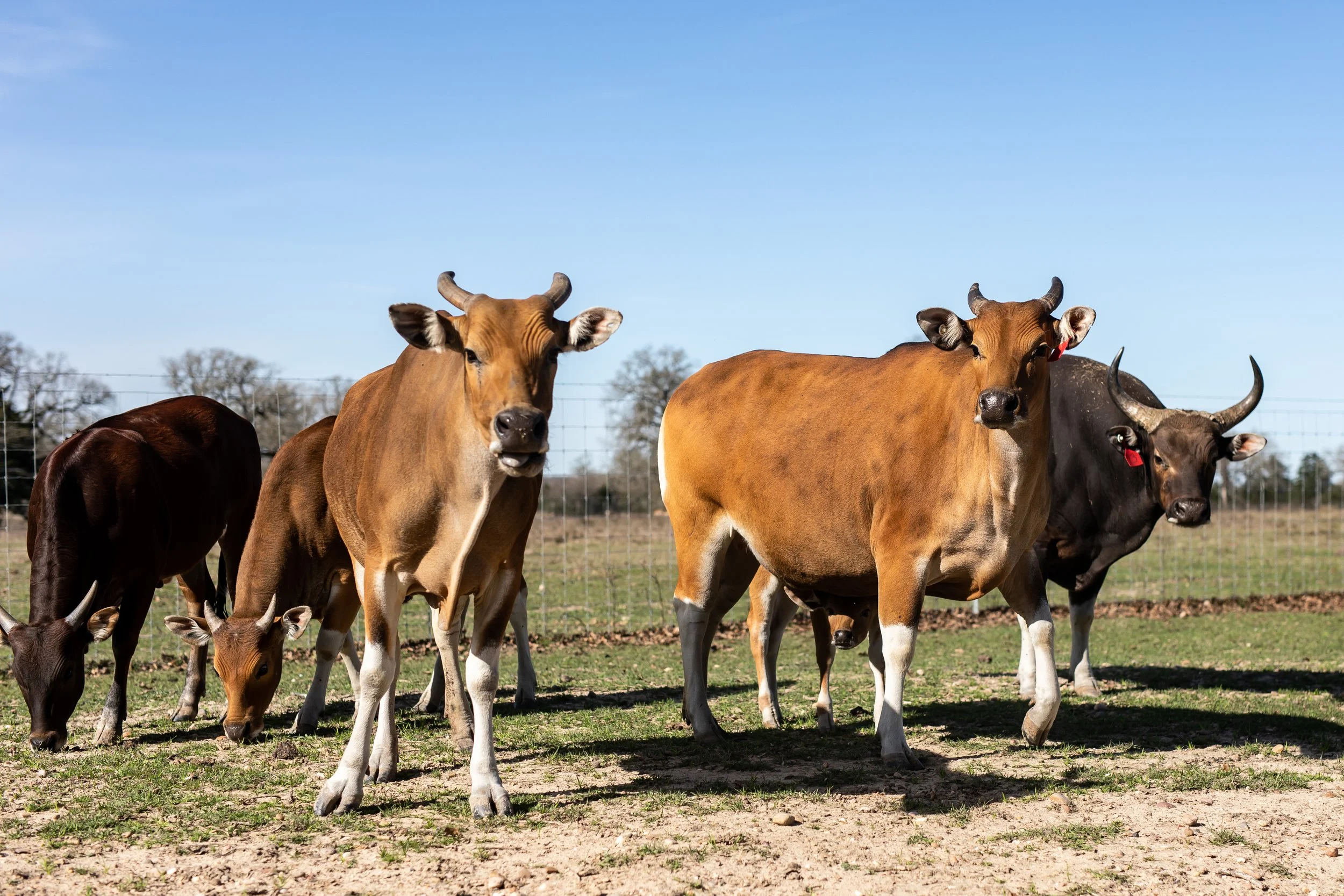
- There are around 1.5 million domestic banteng, which are called Bali cattle
-sexually dimorphic with males being a black coat color and females ranging from dark to light brown
-The banteng is the second endangered species to be successfully cloned, and the first clone to survive beyond infancy.
-forest dwelling species.
-They are legally protected in all countries in their range and are largely restricted to protected areas (possibly barring Cambodia).
BLACKBUCK
Scientific Name: Antilope cervicapra
IUCN Status: Near threatened
Native Origin: Asia (India & Pakistan)
-Individuals, living in herds, have glands in their hooves that leave scent tracks when they move. This form of communication helps separated animals find their herds, following the scent track.
-known as lesser antelope
-mature males change to a black color where females and adolescent males are brown.
-top speed= 50 mph
-herds include 5-50 individuals
Scientific Name: Connochaetes taurinus
IUCN Status: Least concern
Native Origin: Africa
Blue Wildebeest
-a large antelope and one of the two species of wildebeest.
-Blue wildebeest are highly social creatures, gathering in one of the largest migratory herds among antelope species.
- get their name from the silvery-blue sheen of their fur, which actually varies from greyish to brown.
-These animals spend the hottest part of the day resting. Periods of increased activity are the morning and late afternoon.
-The gestation period lasts for 8 months, yielding a single baby, which is capable of standing during the first 15 minutes after birth.
COMMON ELAND
Scientific Name: Taurotragus oryx
IUCN Status: Least concern
Native Origin: Africa
-used by humans for leather, meat, and milk, and has been domesticated in many areas.
-Common elands are crepuscular and are most often found feeding at night, when vegetation has taken in moisture from the air, thus providing a higher water content.
-Common elands are the slowest antelopes in the world. Top speed= 25 mph
-their milk is richer in milkfat, does not have to be refrigerated, and will last for as long as eight months if properly prepared, rather than a few days.
- they are excellent jumpers and can clear heights of 1.5 meters.
Eld’s Deer
Scientific Name: Rucervus eldii
IUCN Status: Endangered
Native Origin: Southeast asia
-Eld's deer are active at night spending most of the time foraging.
- Gestation period of 34 weeks, the female gives birth to a single fawn in a hidden place.
-they were believed to have been used to feed armies during many Asian wars.
-The most common predators are tigers, leopards, and jackals.
-lifespan= 14-19 years.
Scientific Name: Cervus canadensis
IUCN Status: Least concern
Native Origin: North America, Europe
ELK
-one of the largest species within the deer family,
-The common name elk, used in North America, creates confusion because the larger Alces alces, which is called moose in North America, is also called elk in British English (aka called moose a lot outside of North america)
-Their winter coat consists of long, waterproof hairs, which cover the thick, wooly underfur of this animal.
-Elk are social animals, gathering in summer herds that contain up to 400 individuals.
-Their antlers are made of bone, sometimes growing at a rate of as much as 2.5 cm (1 inch) per day
Scientific Name: Dromaius novaehollandiae
IUCN Status: Least concern
Native Origin: Australia
EMU
-second-largest living bird by height
-top speed= 30 mph
-When walking, the emu takes strides of about 3.3 ft, but at full gallop, a stride can be as long as 9 ft.
-An emu has two pairs of eyelids: one is for blinking and the other is to keep dust out.
-Emus swallow pebbles and small rocks to assist in the grinding of food and to accelerate digestion.